


Winter dehydration is the kind you don't notice. And by the time you do - flat energy, dry skin, broken sleep, the 3pm crash - you've already dry.
Most people associate hydration with summer. Heat, sweat, the cold glass of water at the end of a hot day. Winter is the exact opposite, and that's the problem. The cues that tell you to drink water in January are quiet by July. The cues that tell your body it needs the water haven't changed.
The cold diuresis effect.
When temperatures drop, your body constricts blood vessels near the skin to conserve core heat. This raises central blood pressure, and your kidneys respond by filtering more fluid out to reduce it. The result? You urinate more in cold weather, losing fluids faster than you realise - without doing anything different!
Cold air is dry air. Every visible breath you exhale in winter is water vapour leaving your body through respiration. Every single breath, all day long.
Your thirst mechanism is lying.
Here's the part that does the damage. Research shows that cold temperatures suppress the thirst response, and your body's perception of fluid needs drops significantly even when you're losing the same amount, or more.
You're losing more fluid. You're sensing less thirst. You're drinking less water. It's a perfect storm where the outcome is the kind of quiet dehydration that doesn't register as anything in particular.
What 1% Does
Most people associate dehydration with dry mouth and headaches. But chronic mild dehydration, the kind that quietly accumulates through winter, is subtler and more pervasive.
Even a 1-2% drop in fluid levels is enough to reduce concentration, slow reaction time, and cloud your thinking. You might blame the winter blues or afternoon slump, but dehydration is often a significant contributor.
Your immune system takes a hit too. Hydration supports the mucosal membranes that line your nose, throat, and airways - your first line of defence against cold and flu viruses. Dry, under-hydrated tissue is simply easier for pathogens to penetrate.
And if you're exercising in winter, recovery slows. Muscles and joints need fluid to function and repair. Cold weather masks sweat loss during training, but you're still losing fluid - just less visibly.
Water doesn’t hydrate you, electrolytes do.
Water is essential, but it's only half the equation. Electrolytes, such as sodium, potassium, magnesium, are what allow your cells to actually absorb and retain fluid. Without the gradient they create, water can pass through you without being used at all.
This is especially relevant in winter, when sweating less means the body isn't naturally cycling electrolytes. Drinking more water alone doesn't solve the problem — it can sometimes dilute the system further.
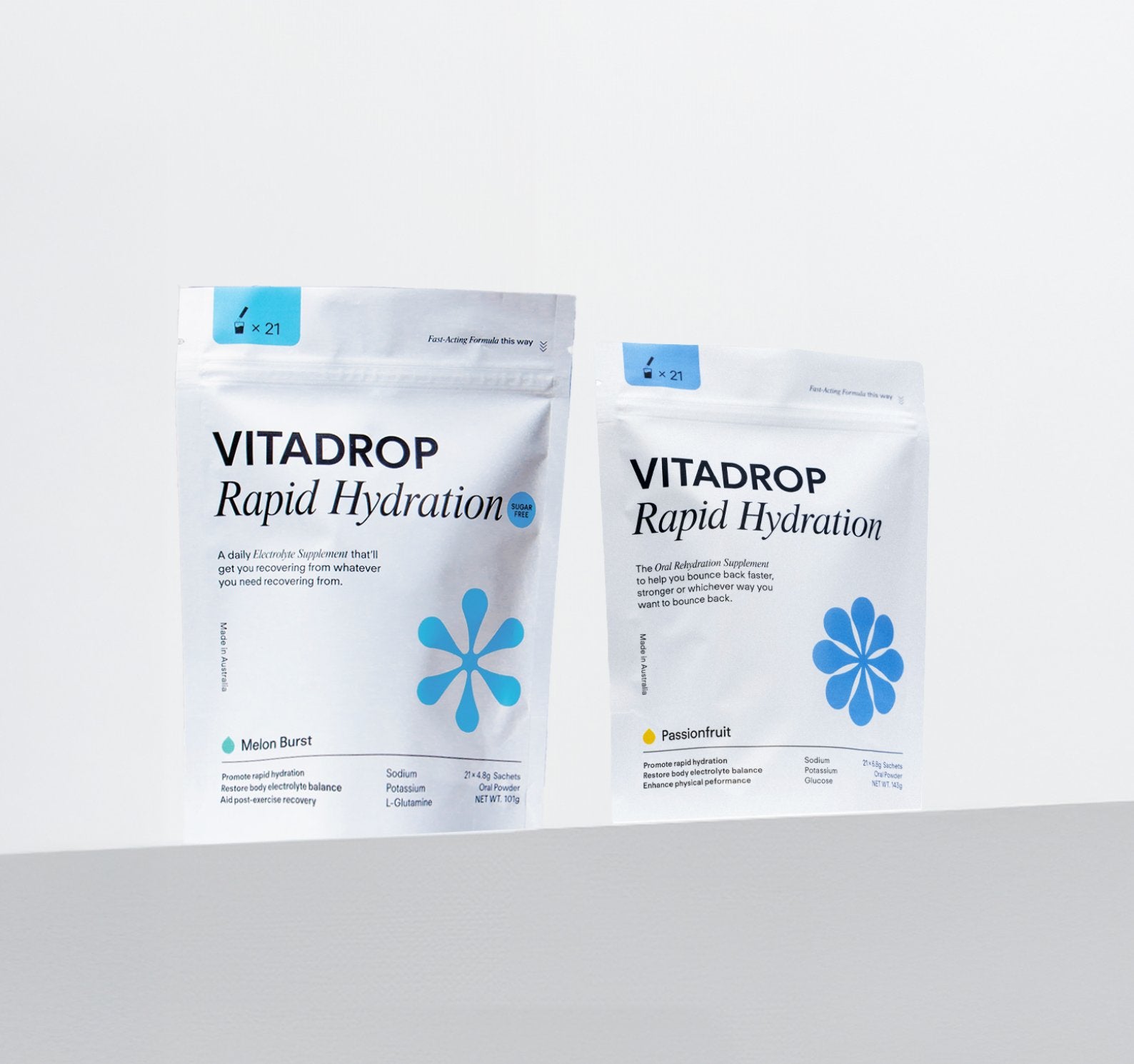
Most hydration products solve the absorption problem with sugar. It works - glucose drives sodium across the gut wall, and water follows. But it also spikes glucose and crashes energy. Vitadrop Rapid Hydration Sugar-Free uses L-glutamine to drive the same gradient at the gut wall - without the glucose load. Same mechanism. No crash.
Small habits that make a big difference.
The fix isn't to drink a litre of cold water at once. It's a consistent, steady intake throughout the day.
Start before coffee. Caffeine is mildly diuretic, so rehydrate first -water or an electrolyte drink before your morning brew. Use warm drinks strategically too, herbal teas and warm water with lemon count towards your intake and feel far more appealing in the cold.
Hydrate before and after exercise. Cold weather masks sweat loss, but doesn’t prevent it so don't skip the post-workout replenishment. And make hydration visible, a bottle on your desk, a sachet next to the coffee machine. What you see, you drink.
Winter wellness starts with the basics.
Sleep, movement, nutrition. These dominate the winter wellness conversation. But hydration is the foundation underneath all three. . Inadequate fluid intake quietly undermines your sleep quality, immune function, mental clarity, and physical recovery - and it’s the easiest of those four to fix
The fix isn't complicated, it just requires a little more intentionality in winter. Drink consistently. Choose a formulation that actually absorbs. Make it a habit
Your immune system, your skin, your brain, and your energy levels will thank you before winter is out.

